Sperm
Sperm
Sperm
Bank
Bank
Bank
HealthTech | B2B2C
Clinical Tablet System)
HealthTech | B2B2C
Clinical Tablet System)

Ichilov Medical Center
Sperm Bank App
Ichilov Medical Center
Sperm Bank App
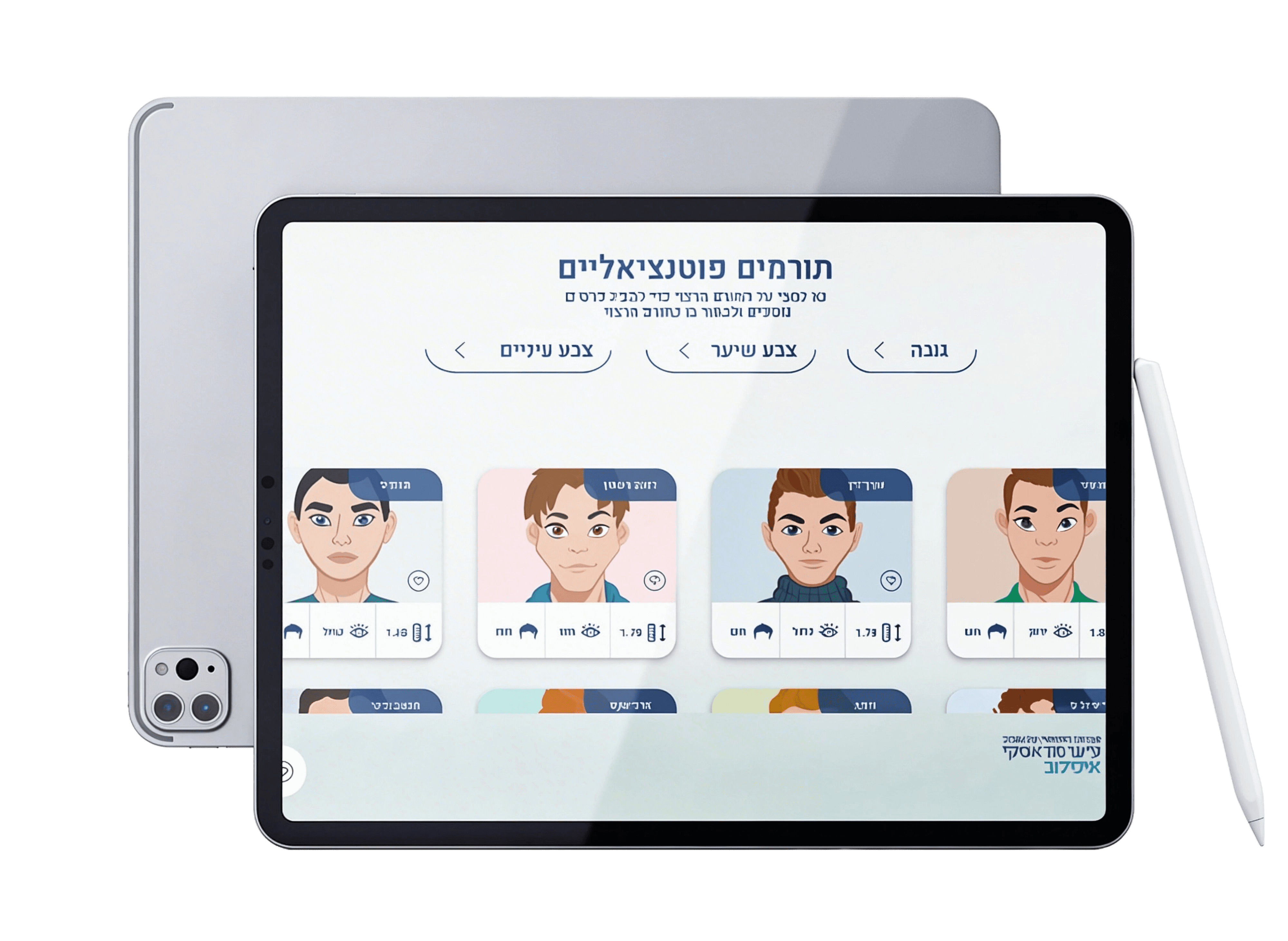
This project is a dedicated B2C healthcare tablet application designed for the Ichilov Medical Center Sperm Bank to digitize the donor selection process. The application is intended for internal use within the hospital's sperm bank department only and is not available for public download in app stores. It transforms a sensitive, manual medical procedure into a streamlined digital experience, replacing outdated physical catalogs with an intuitive, data-driven interface.
This project is a dedicated B2C healthcare tablet application designed for the Ichilov Medical Center Sperm Bank to digitize the donor selection process. The application is intended for internal use within the hospital's sperm bank department only and is not available for public download in app stores. It transforms a sensitive, manual medical procedure into a streamlined digital experience, replacing outdated physical catalogs with an intuitive, data-driven interface.

As part of Ichilov’s digital transformation, the hospital’s goal was to replace their paper-based donor folders with a secure, automated tablet solution for patients.
Prior to this project, no such application existed; it began as an initial conceptual idea to modernize the department's operations. My objective was to characterize and design a high-stakes user journey, from complex genetic screening and CMV filtering to a personalized donor catalog, ensuring medical accuracy and a supportive user experience.
As part of Ichilov’s digital transformation, the hospital’s goal was to replace their paper-based donor folders with a secure, automated tablet solution for patients.
Prior to this project, no such application existed; it began as an initial conceptual idea to modernize the department's operations. My objective was to characterize and design a high-stakes user journey, from complex genetic screening and CMV filtering to a personalized donor catalog, ensuring medical accuracy and a supportive user experience.
Because there were no direct competitors or comparable digital products for this specific hospital-based workflow, I looked at adjacent platforms with similar browsing and decision-making patterns. Instead of borrowing visual style, I focused on interaction patterns that could help make a sensitive and complex selection process feel clearer, more structured, and easier to navigate.
User Research & Strategy
User Research & Strategy
Dating app inspiration:
Short profile view, visible external features, key details, and a Favorites flow
for saving options.
Dating app inspiration:
Short profile view, visible external features, key details, and a Favorites flow
for saving options.
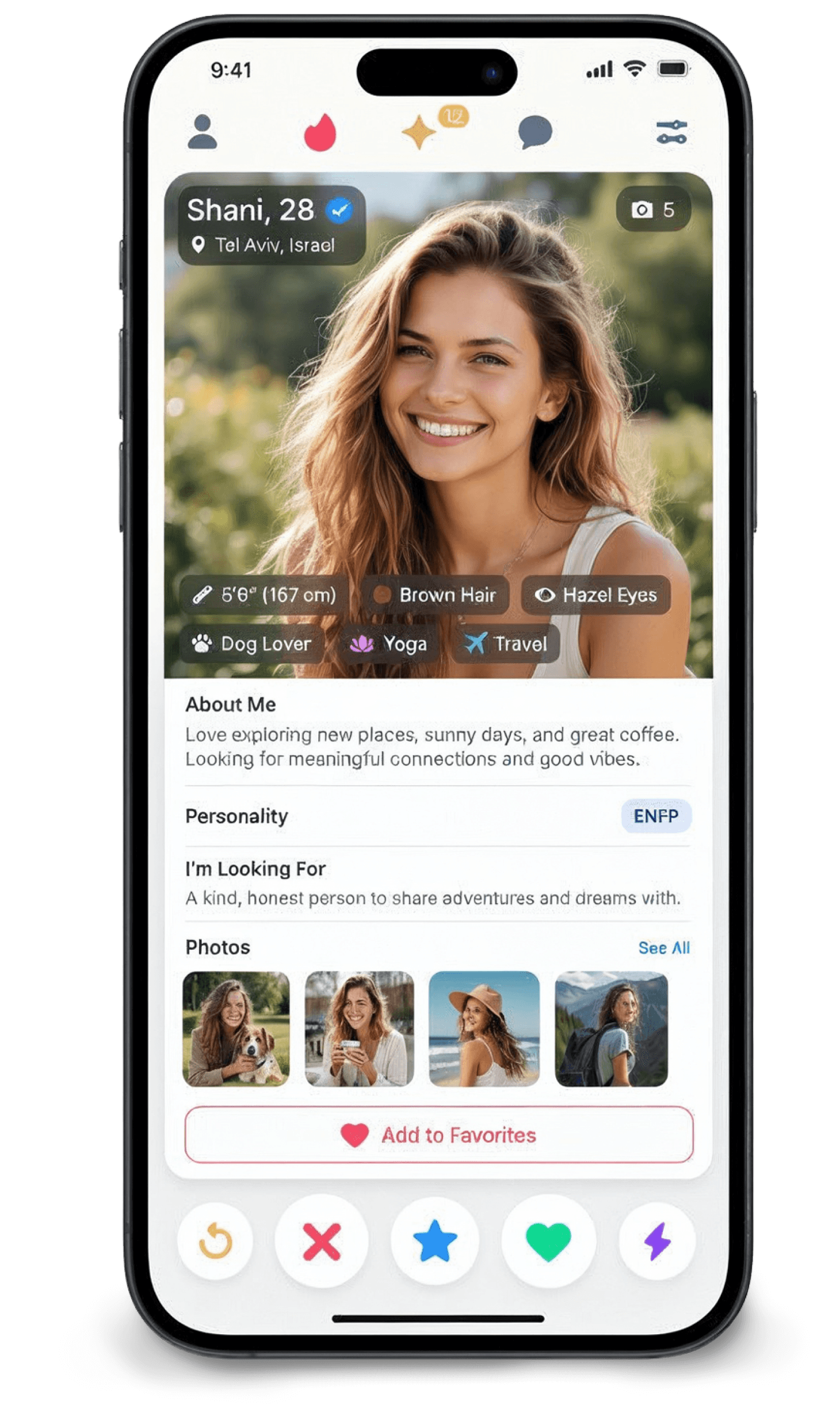
External Features
Key Details
Favorites
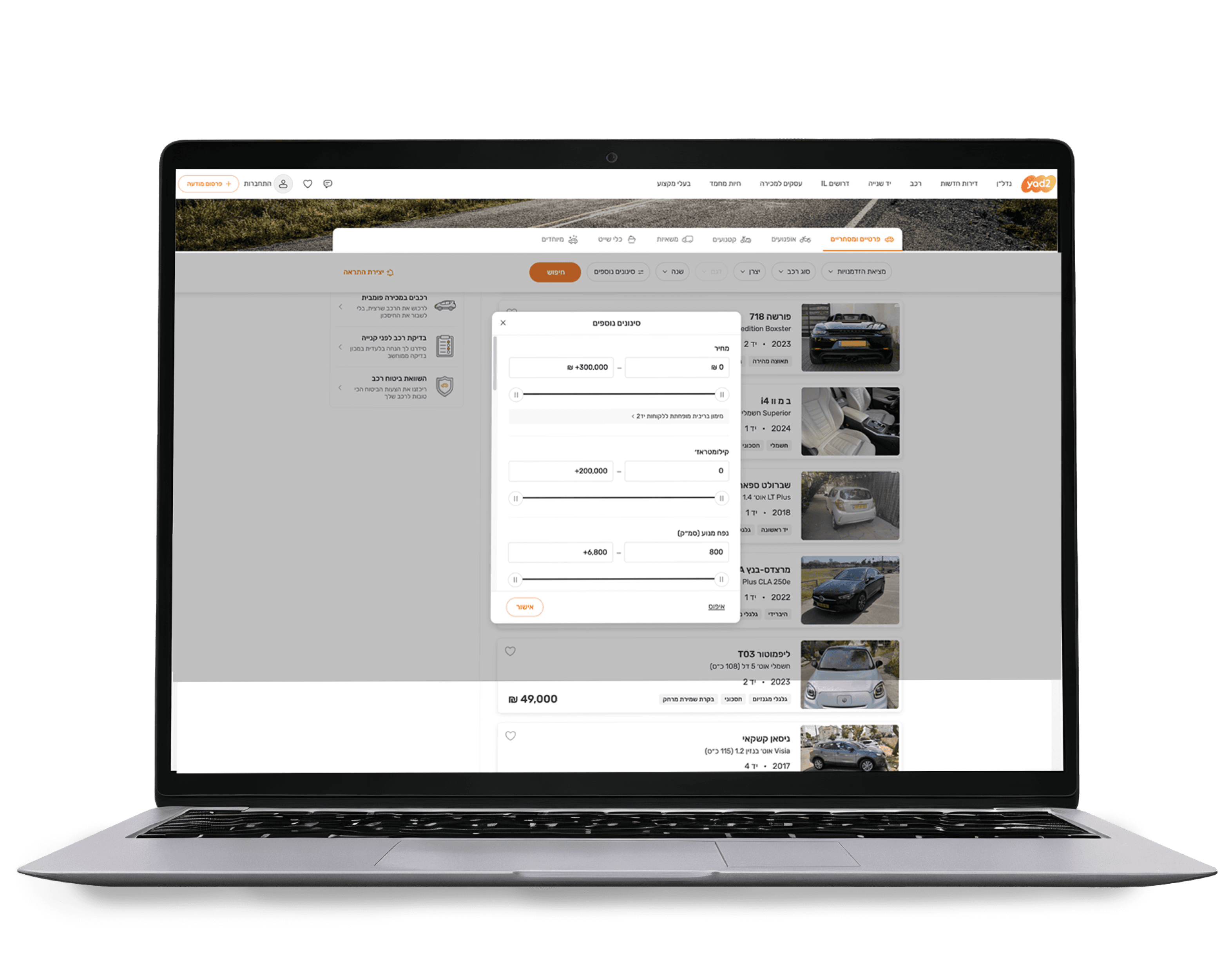
Filtering
Card-based layout
Marketplace Dynamics (e.g., Yad2):
Logic of card-based browsing, making options easier to scan and compare.
I also adapted their filtering systems to help users narrow down results quickly.
Because there were no direct competitors or comparable digital products for this specific hospital-based workflow, I looked at adjacent platforms with similar browsing and decision-making patterns. Instead of borrowing visual style, I focused on interaction patterns that could help make a sensitive and complex selection process feel clearer, more structured, and easier to navigate.
Because there were no direct competitors or comparable digital products for this specific hospital-based workflow, I looked at adjacent platforms with similar browsing and decision-making patterns. Instead of borrowing visual style, I focused on interaction patterns that could help make a sensitive and complex selection process feel clearer, more structured, and easier to navigate.
User Research & Strategy
User Research
& Strategy
Marketplace Dynamics (e.g., Yad2):
Logic of card-based browsing, making options easier to scan and compare.
I also adapted their filtering systems to help users narrow down results quickly.
Marketplace Dynamics (e.g., Yad2):
Logic of card-based browsing, making options easier to scan and compare.
I also adapted their filtering systems to help users narrow down results quickly.
Dating app inspiration:
Short profile view, visible external features, key details, and a Favorites flow
for saving options.
External Features
Key Details
Favorites

Pain Points
The previous paper-based system offered no way to filter donor data, forcing patients to manually compare dozens of physical pages to find a match.
Without a "Favorites" feature, users had to rely on memory or to keep track of potential donors.
The previous paper-based system offered no way to filter donor data, forcing patients to manually compare dozens of physical pages to find a match.
Without a "Favorites" feature, users had to rely on memory or to keep track of potential donors.
Overwhelming.
Manual.
Unstructured.
Overwhelming.
Manual.
Unstructured.
Pain Points
The previous paper-based system offered no way to filter donor data, forcing patients to manually compare dozens of physical pages to find a match.
Without a "Favorites" feature, users had to rely on memory or to keep track of potential donors.
The User Journey
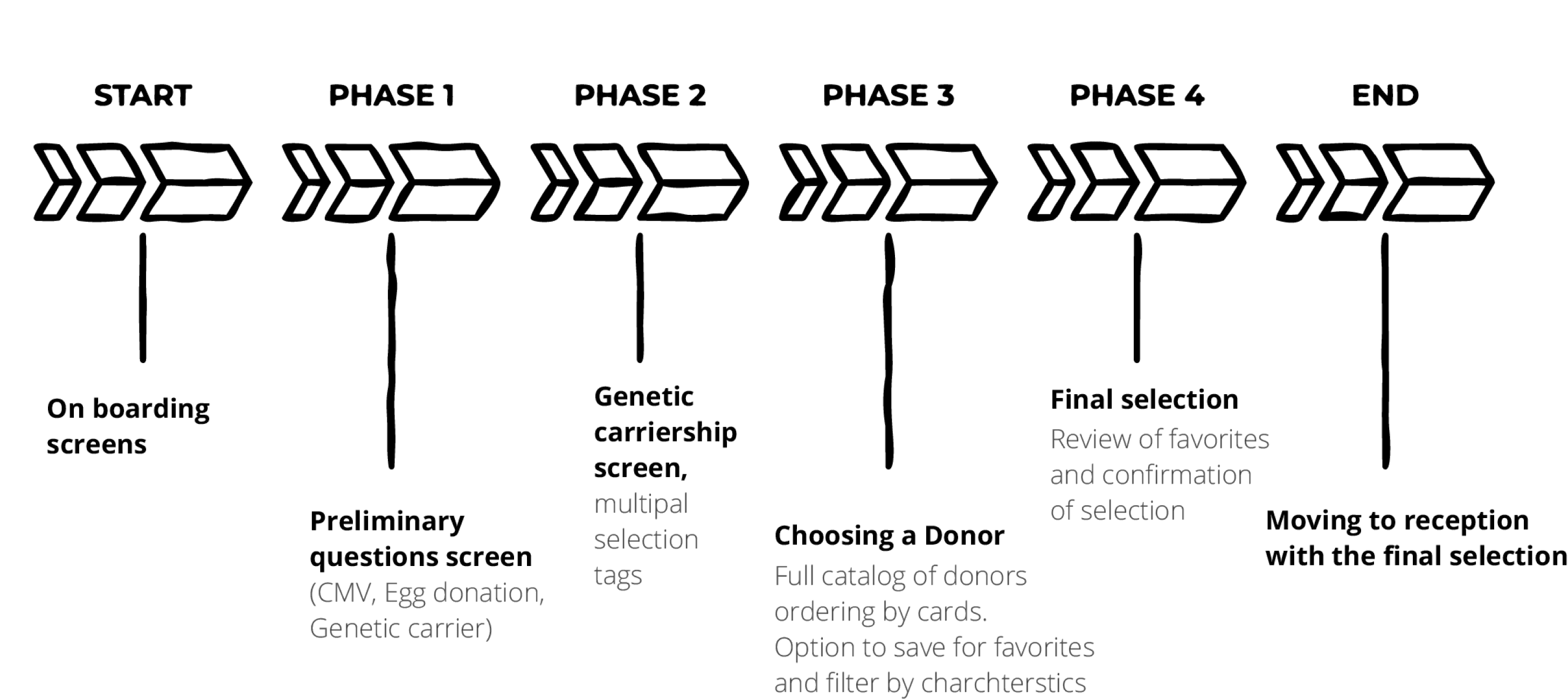
The User Journey

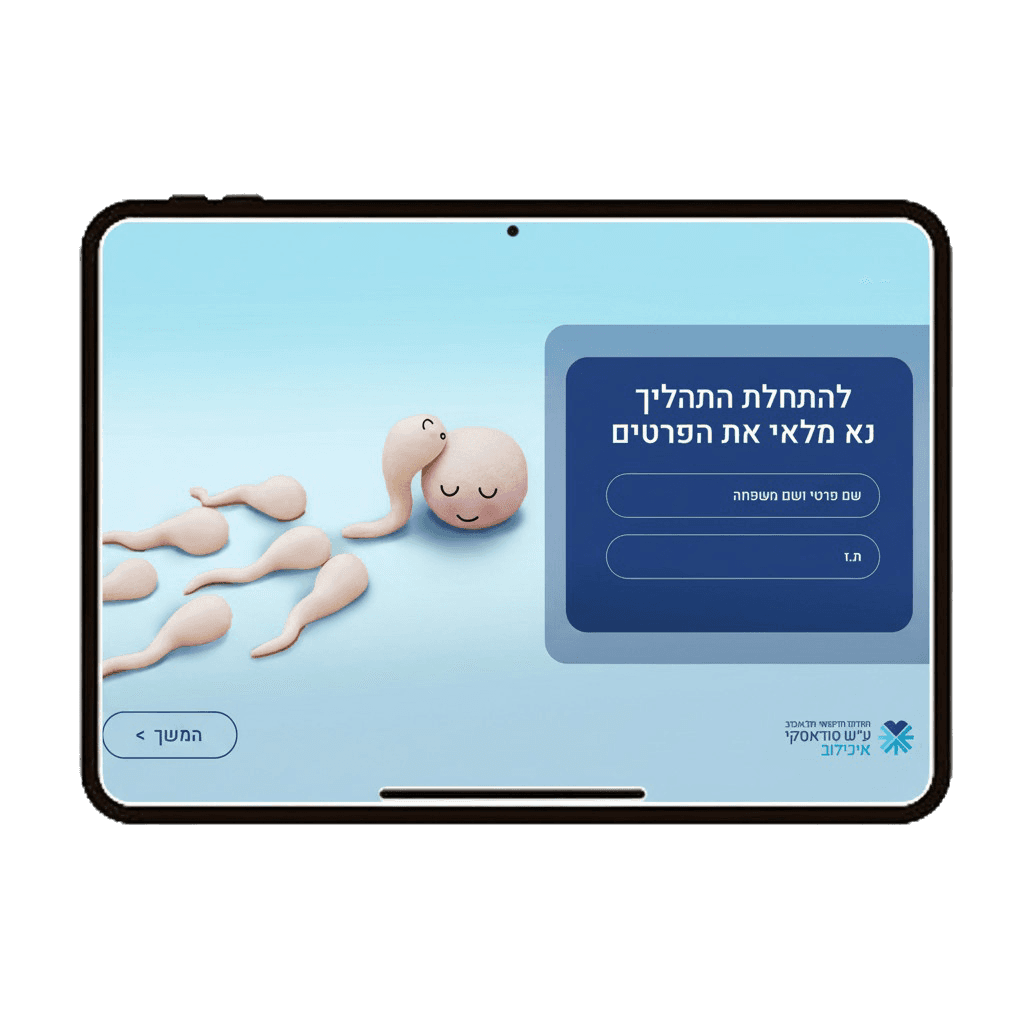
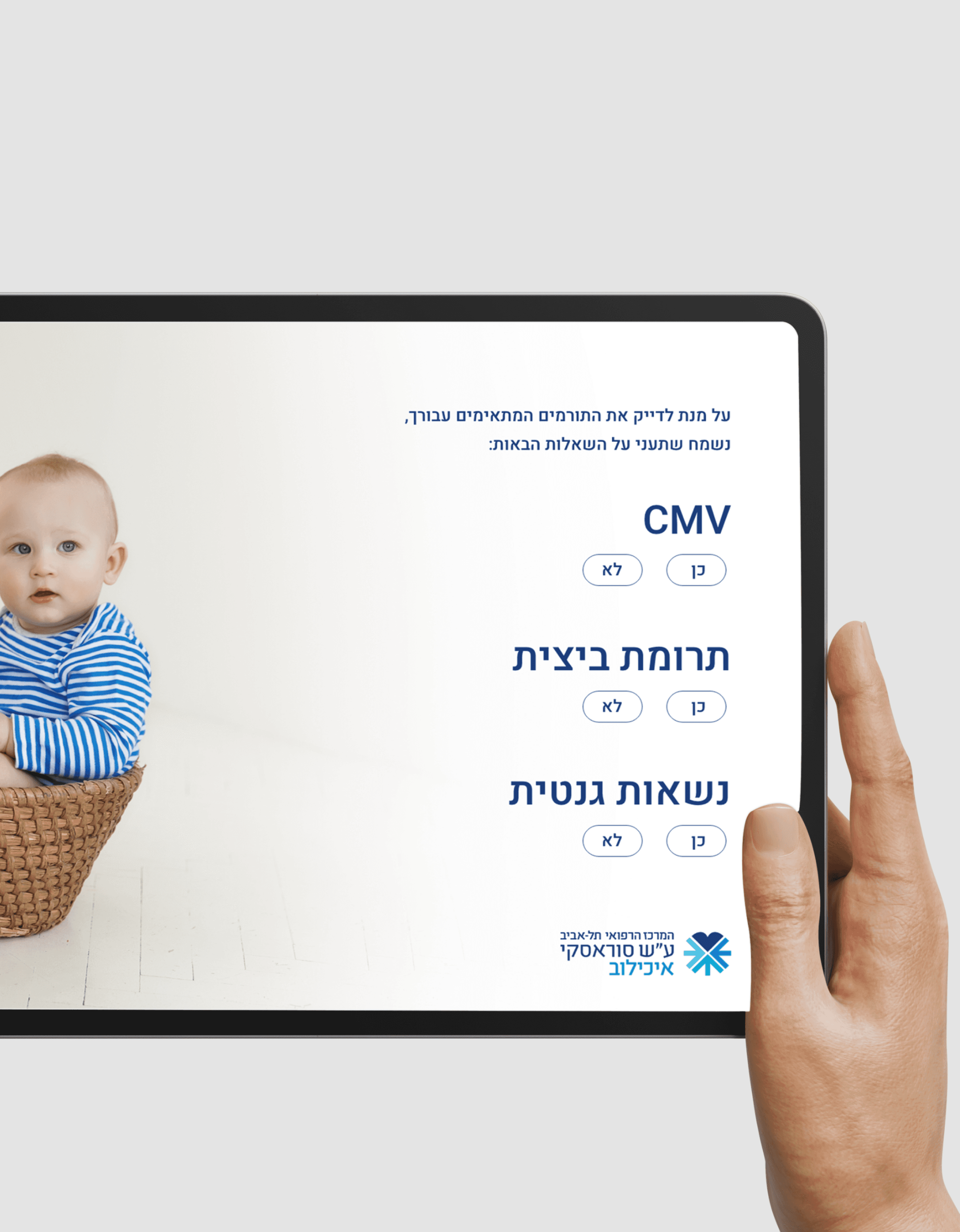
The guided questionnaire introduces immediate efficiency by performing an initial, smart filter of the entire donor database. This intelligent filtering instantly presents only the relevant donor candidates based on the patient's answers, a crucial feature that was impossible to achieve with a physical, paper binder.
The guided questionnaire introduces immediate efficiency by performing an initial, smart filter of the entire donor database. This intelligent filtering instantly presents only the relevant donor candidates based on the patient's answers, a crucial feature that was impossible to achieve with a physical, paper binder.
The guided questionnaire introduces immediate efficiency by performing an initial, smart filter of the entire donor database. This intelligent filtering instantly presents only the relevant donor candidates based on the patient's answers, a crucial feature that was impossible to achieve with a physical, paper binder.
Because this step can feel emotionally heavy, I introduced baby imagery as a way to reinforce motivation.
The desire for a child is a powerful driver, and this visual cue gently reminds users of the purpose behind the process, helping them stay engaged and continue through the questionnaire.
Because this step can feel emotionally heavy, I introduced baby imagery as a way to reinforce motivation.
The desire for a child is a powerful driver, and this visual cue gently reminds users of the purpose behind the process, helping them stay engaged and continue through the questionnaire.
Because this step can feel emotionally heavy, I introduced baby imagery as a way to reinforce motivation.
The desire for a child is a powerful driver, and this visual cue gently reminds users of the purpose behind the process, helping them stay engaged and continue through the questionnaire.
Guiding Users Through Complexity
Guiding Users
Through Complexity
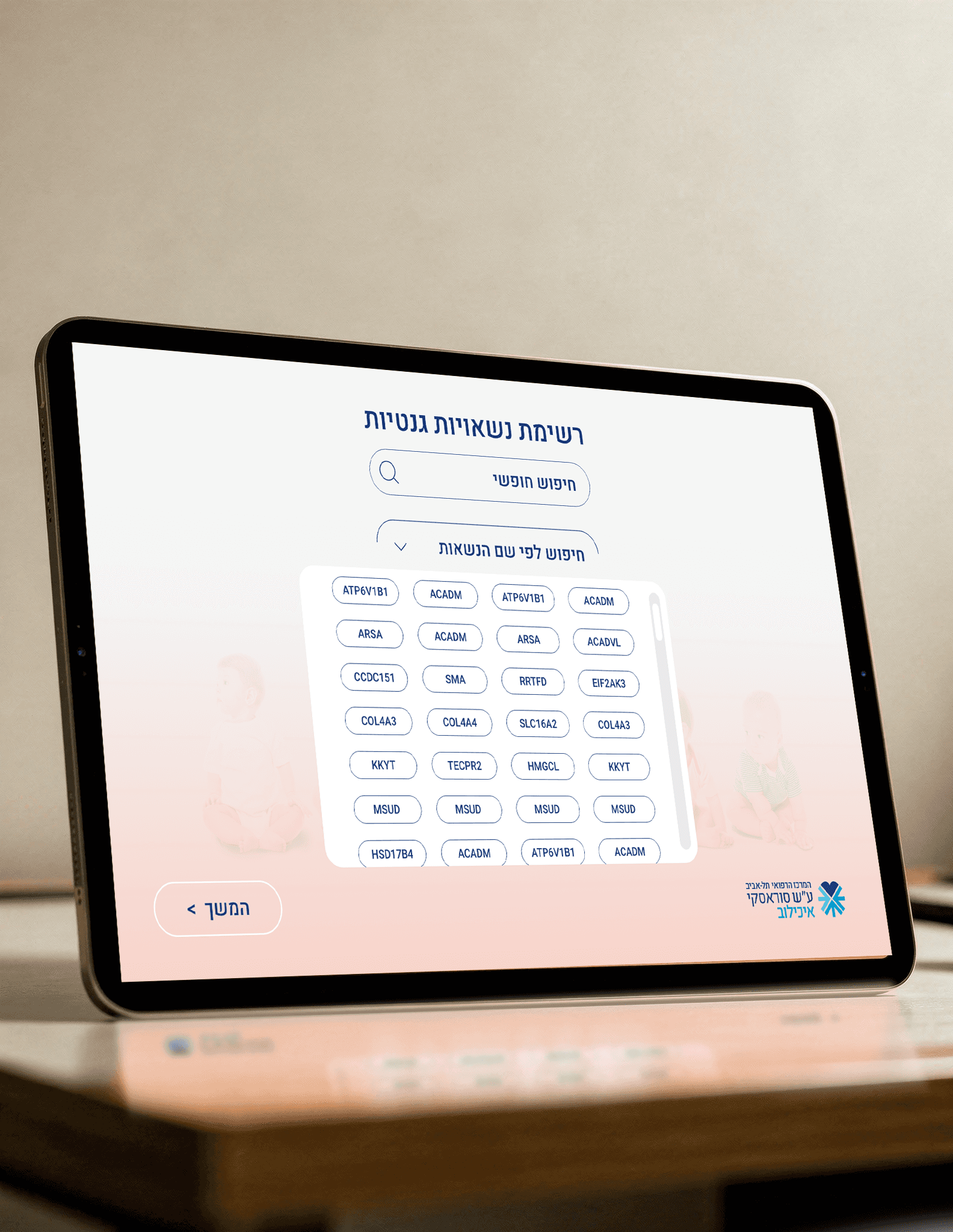
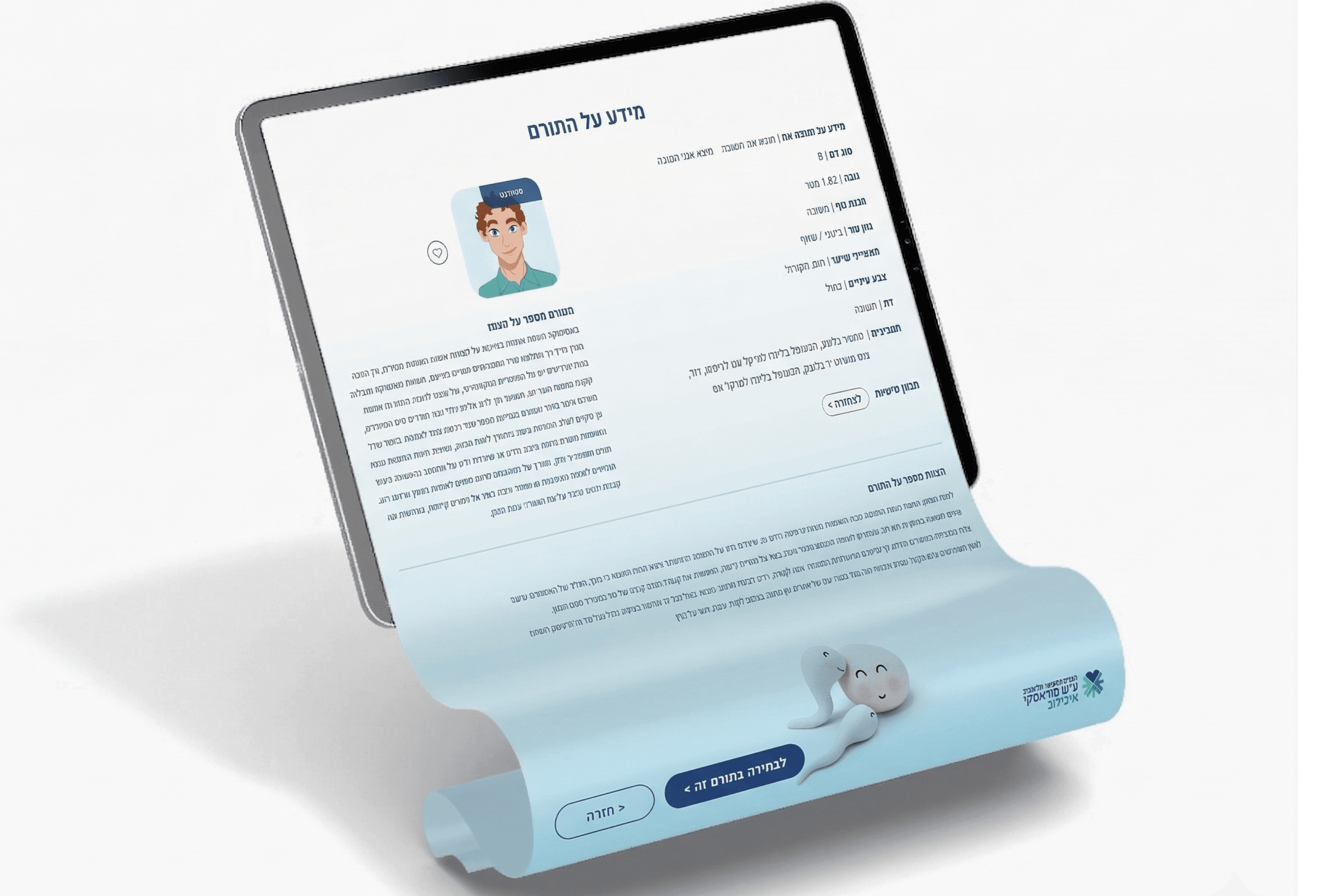
A detailed internal page for each donor, including a personality test (16 types), donor's self-description, and staff impressions.
I sourced a specialized avatar-creation platform that allowed us to generate unique characters based on donor descriptions, notably, this was achieved long before the era of AI.
This strategic choice provided the hospital staff with a simple, repeatable tool, empowering them to independently create and add new donor avatars as the database grew, ensuring the application remains visually consistent and up-to-date without needing further design intervention.
Turning Data into Clear Choices
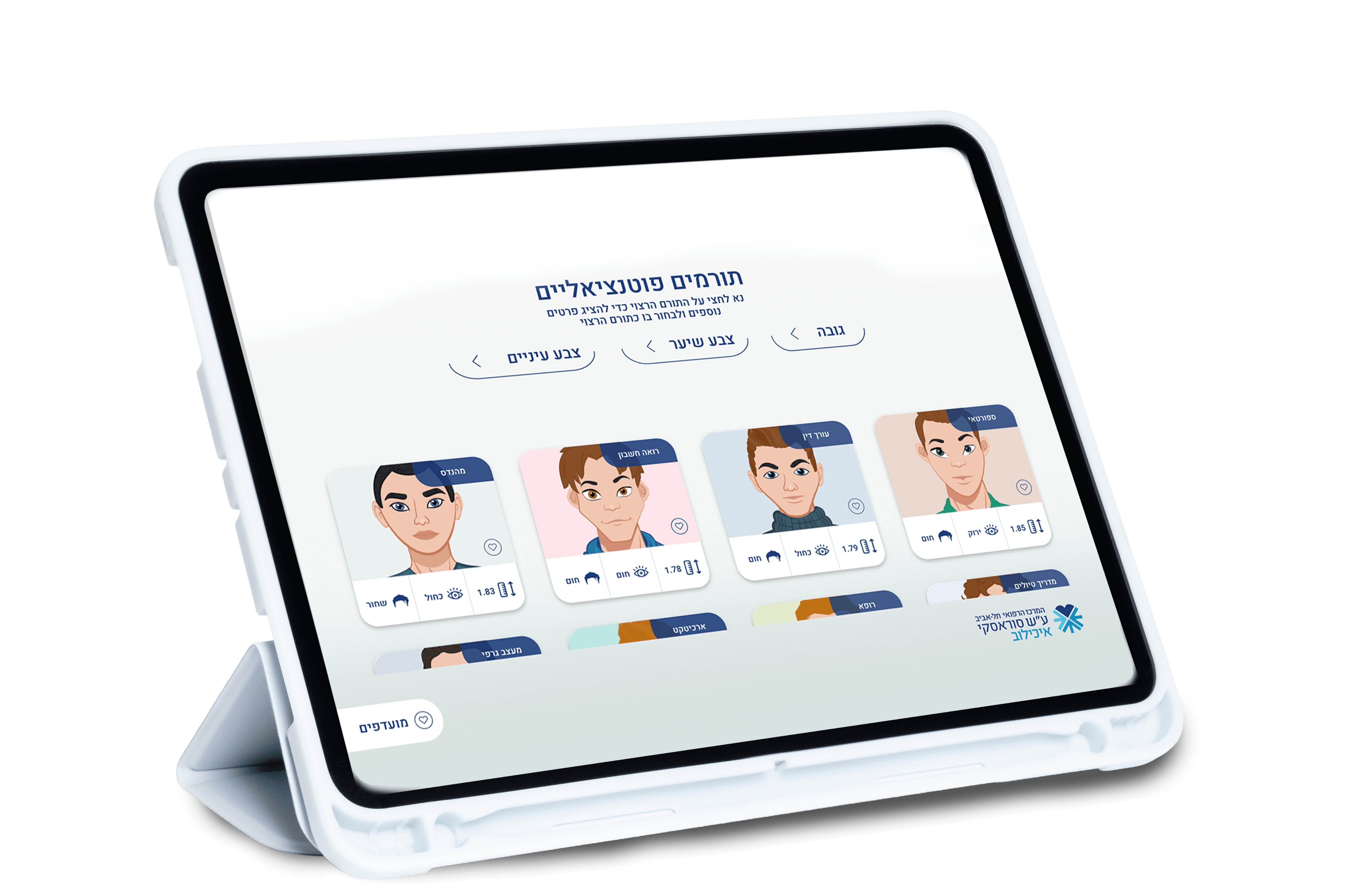
The Donor Selection screen empowers patients with advanced, intuitive filtering tools, allowing them to refine the catalog based on key physical criteria such as hair color, eye color, and height. To streamline the decision-making process, I included a
"Save to Favorites" feature, enabling users to curate a shortlist of preferred candidates easily. Furthermore, each donor card serves as a gateway; by clicking on a profile, patients can access a dedicated "Donor Information" screen to explore in-depth details, ensuring a transparent and informed selection experience.
A detailed internal page for each donor, including a personality test (16 types), donor's self-description, and staff impressions.
I sourced a specialized avatar-creation platform that allowed us to generate unique characters based on donor descriptions, notably, this was achieved long before the era of AI.
This strategic choice provided the hospital staff with a simple, repeatable tool, empowering them to independently create and add new donor avatars as the database grew, ensuring the application remains visually consistent and up-to-date without needing further design intervention.
Designing Without a Real Reference
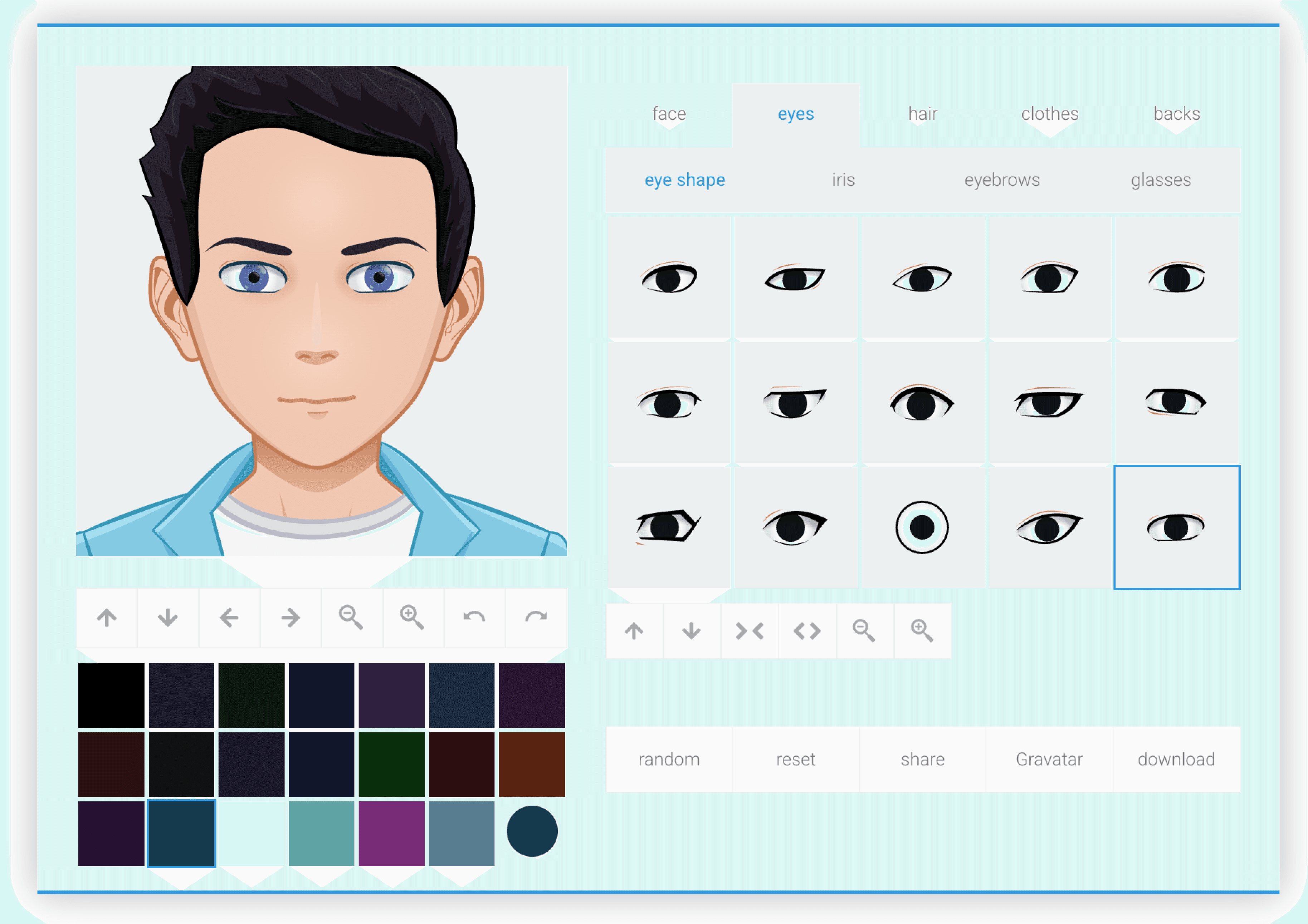
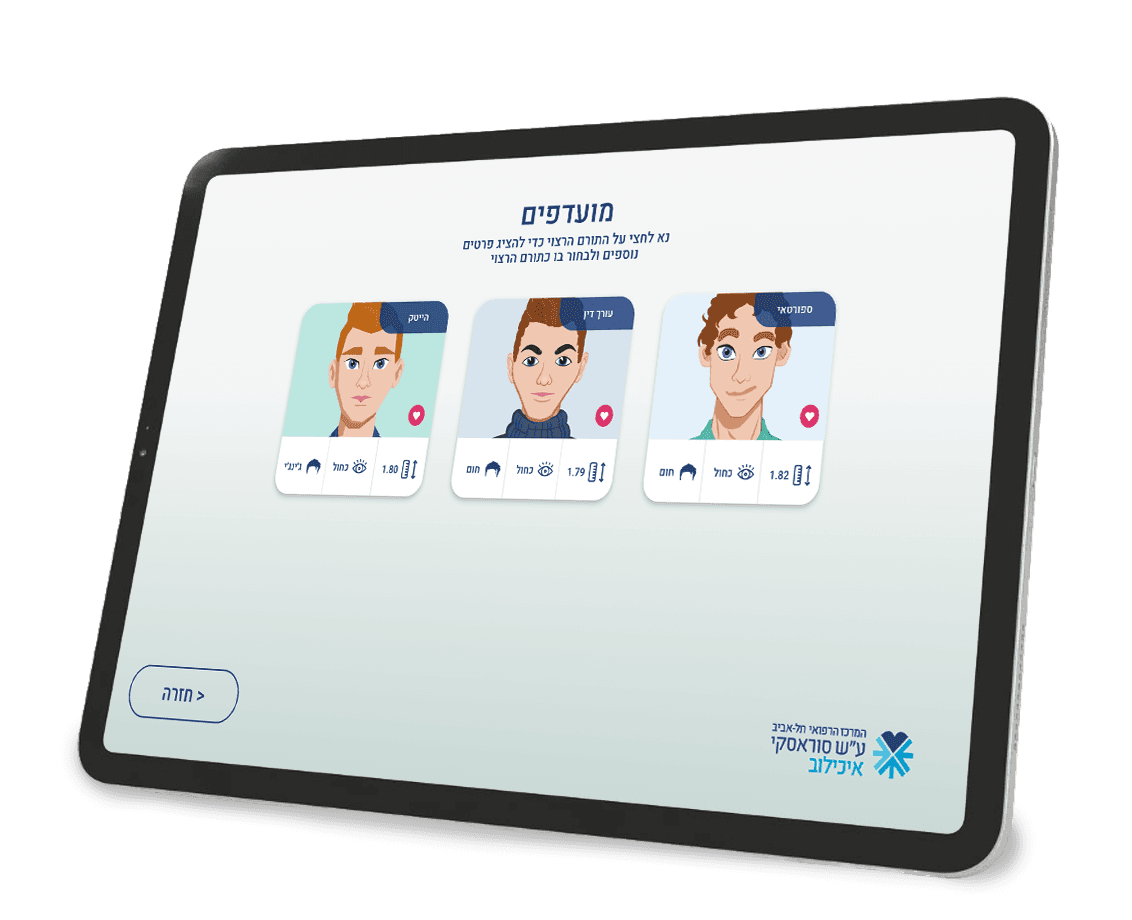
I used a customizable avatar tool to build each donor based on real physical data such as eye color, hair, skin tone, and build.
Since neither I nor the patients had access to the donors’ real appearance, these avatars were designed as close approximations based on the available data. My goal was to create clear, consistent profiles while ensuring each donor still felt visually distinct, balancing accuracy with a simple visual language that could scale over time.
I used a customizable avatar tool to build each donor based on real physical data such as eye color, hair, skin tone, and build.
Since neither I nor the patients had access to the donors’ real appearance, these avatars were designed as close approximations based on the available data. My goal was to create clear, consistent profiles while ensuring each donor still felt visually distinct, balancing accuracy with a simple visual language that could scale over time.
From Many Options to One Choice
After the initial filtering, users are still left with many potential donors, this is where the real decision begins. By saving candidates to “Favorites,” they can create a personal shortlist, revisit profiles, and dive deeper into each option. This flow helps turn a large set of options into a clear, focused path toward one final choice.
After the initial filtering, users are still left with many potential donors, this is where the real decision begins. By saving candidates to “Favorites,” they can create a personal shortlist, revisit profiles, and dive deeper into each option. This flow helps turn a large set of options into a clear, focused path toward one final choice.
A Flexible Final Decision
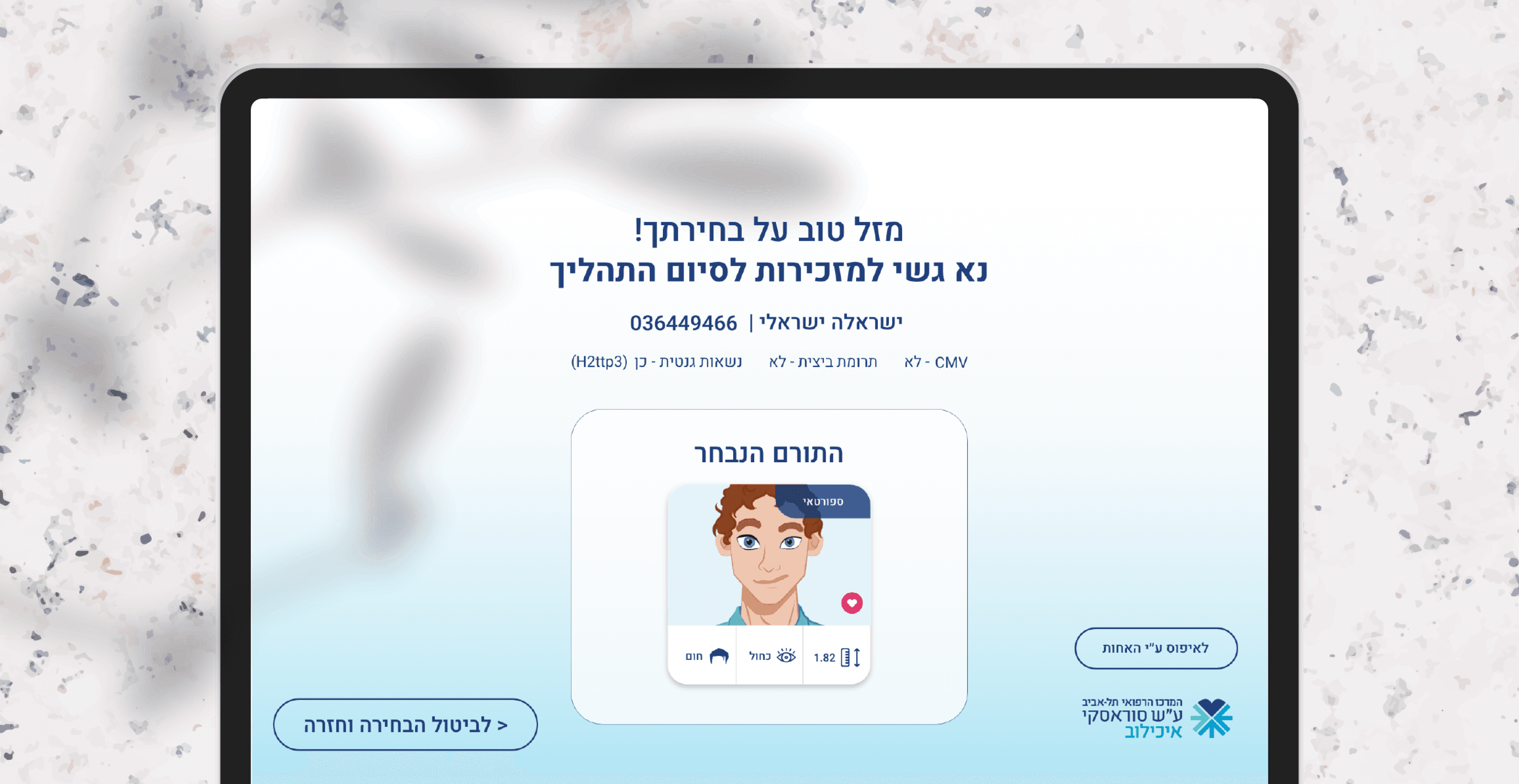
Even at the final stage, the design allows room for reconsideration. If a patient chooses to go back, they return to their saved “Favorites” list, with all selections preserved. This enables them to re-evaluate options, revisit detailed profiles, or continue browsing within the already filtered pool, supporting a more confident
and flexible decision-making process.
Even at the final stage, the design allows room for reconsideration. If a patient chooses to go back, they return to their saved “Favorites” list, with all selections preserved. This enables them to re-evaluate options, revisit detailed profiles, or continue browsing within the already filtered pool, supporting a more confident
and flexible decision-making process.
Designing this application was more than a professional task for me - it was a deeply personal project. Having gone through fertility treatments myself, I approached this challenge with a strong sense of empathy, understanding how sensitive and overwhelming this process can be. This perspective guided my decisions throughout the design, helping me focus not only on functionality but also on creating a supportive and reassuring experience.
The final product is still in use at Ichilov Medical Center today, transforming a manual, paper-based process into a clear and structured digital experience.
By introducing filtering, visual profiles, and a more intuitive flow, the experience shifted from a heavy administrative task into a more engaging and manageable journey, closer to a familiar, decision-based experience like a dating app.
Designing this application was more than a professional task for me - it was a deeply personal project. Having gone through fertility treatments myself, I approached this challenge with a strong sense of empathy, understanding how sensitive and overwhelming this process can be. This perspective guided my decisions throughout the design, helping me focus not only on functionality but also on creating a supportive and reassuring experience.
The final product is still in use at Ichilov Medical Center today, transforming a manual, paper-based process into a clear and structured digital experience.
By introducing filtering, visual profiles, and a more intuitive flow, the experience shifted from a heavy administrative task into a more engaging and manageable journey, closer to a familiar, decision-based experience like a dating app.
On a
Personal
Note
On a
Personal
Note
Next Project >
< Previous Project
A detailed internal page for each donor, including a personality test (16 types), donor's self-description, and staff impressions.
I sourced a specialized avatar-creation platform that allowed us to generate unique characters based on donor descriptions, notably, this was achieved long before the era of AI.
This strategic choice provided the hospital staff with a simple, repeatable tool, empowering them to independently create and add new donor avatars as the database grew, ensuring the application remains visually consistent and up-to-date without needing further design intervention.
Turning Data into Clear Choices
The Donor Selection screen empowers patients with advanced, intuitive filtering tools, allowing them to refine the catalog based on key physical criteria such as hair color, eye color, and height. To streamline the decision-making process, I included a
"Save to Favorites" feature, enabling users to curate a shortlist of preferred candidates easily. Furthermore, each donor card serves as a gateway; by clicking on a profile, patients can access a dedicated "Donor Information" screen to explore in-depth details, ensuring a transparent and informed selection experience.
Turning Data into Clear Choices
The Donor Selection screen empowers patients with advanced, intuitive filtering tools, allowing them to refine the catalog based on key physical criteria such as hair color, eye color, and height. To streamline the decision-making process, I included a
"Save to Favorites" feature, enabling users to curate a shortlist of preferred candidates easily. Furthermore, each donor card serves as a gateway; by clicking on a profile, patients can access a dedicated "Donor Information" screen to explore in-depth details, ensuring a transparent and informed selection experience.
Turning Data into Clear Choices
The Donor Selection screen empowers patients with advanced, intuitive filtering tools, allowing them to refine the catalog based on key physical criteria such as hair color, eye color, and height. To streamline the decision-making process, I included a
"Save to Favorites" feature, enabling users to curate a shortlist of preferred candidates easily. Furthermore, each donor card serves as a gateway; by clicking on a profile, patients can access a dedicated "Donor Information" screen to explore in-depth details, ensuring a transparent and informed selection experience.
On a
Personal
Note
Designing this application was more than a professional task for me - it was a deeply personal project. Having gone through fertility treatments myself, I approached this challenge with a strong sense of empathy, understanding how sensitive and overwhelming this process can be. This perspective guided my decisions throughout the design, helping me focus not only on functionality but also on creating a supportive and reassuring experience.
The final product is still in use at Ichilov Medical Center today, transforming a manual, paper-based process into a clear and structured digital experience.
By introducing filtering, visual profiles, and a more intuitive flow, the experience shifted from a heavy administrative task into a more engaging and manageable journey, closer to a familiar, decision-based experience like a dating app.
Designing Without a Real Reference
I used a customizable avatar tool to build each donor based on real physical data such as eye color, hair, skin tone, and build.
Since neither I nor the patients had access to the donors’ real appearance, these avatars were designed as close approximations based on the available data. My goal was to create clear, consistent profiles while ensuring each donor still felt visually distinct, balancing accuracy with a simple visual language that could scale over time.
The User Journey
From Many Options to One Choice
After the initial filtering, users are still left with many potential donors, this is where the real decision begins. By saving candidates to “Favorites,” they can create a personal shortlist, revisit profiles, and dive deeper into each option. This flow helps turn a large set of options into a clear, focused path toward one final choice.
A Flexible Final Decision
Even at the final stage, the design allows room for reconsideration. If a patient chooses to go back, they return to their saved “Favorites” list, with all selections preserved. This enables them to re-evaluate options, revisit detailed profiles, or continue browsing within the already filtered pool, supporting a more confident
and flexible decision-making process.
Next Project >
< Previous Project